
Composer Maclaine Diemer breaks down the architecture of live recording. See the full story on Substack.
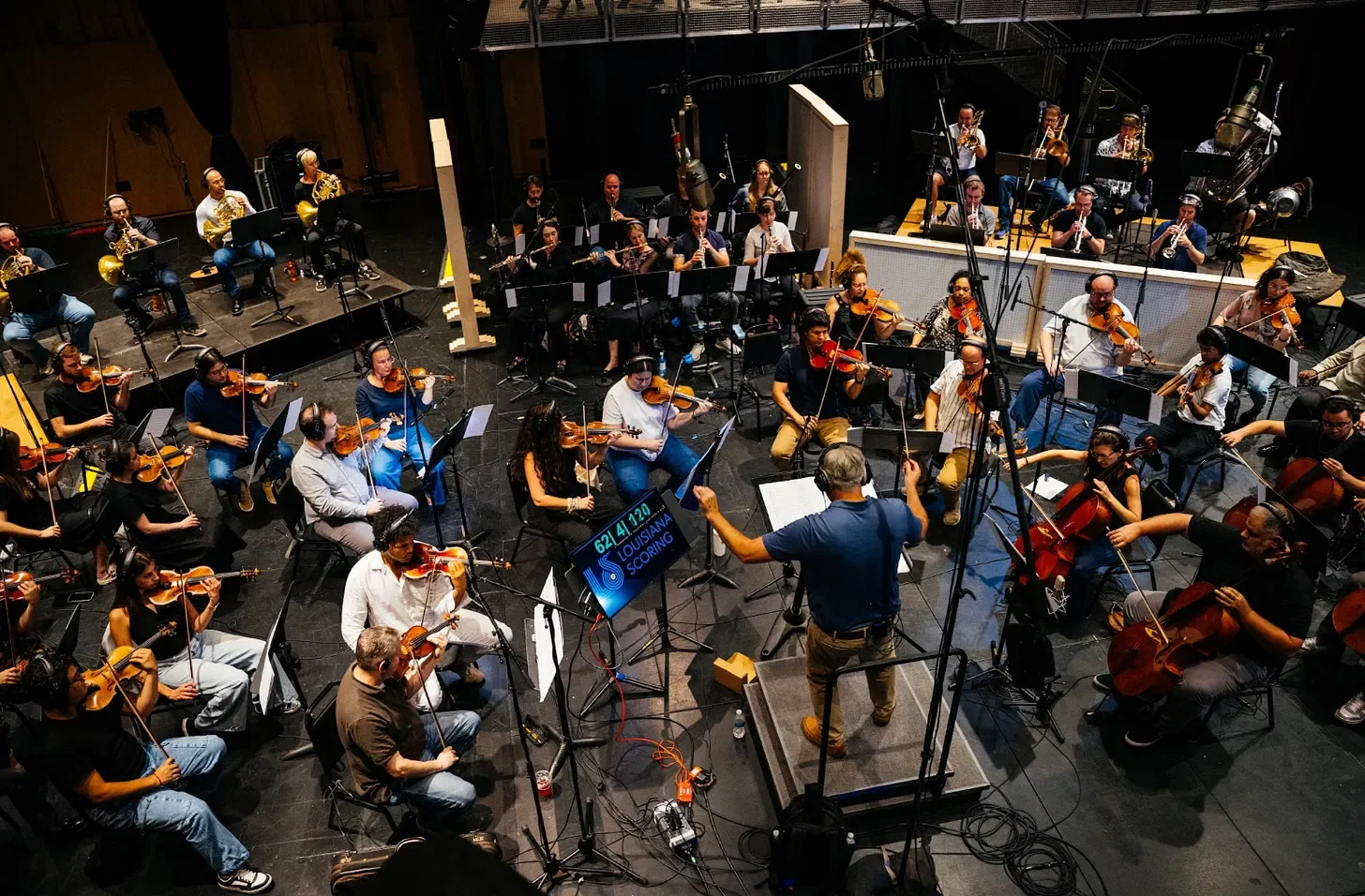
Photo by Brennon Fain
Live orchestral recording sits at the center of a lot of conversations in scoring right now, from tight budgets to the question of where and how to record. To get a working composer’s perspective, we sat down with Maclaine Diemer.
Maclaine is a Los Angeles-based composer for games and media, best known for his work on Guild Wars 2, Firmament, and the Rock Band franchise. A two-time nominee for the Game Music Award at the World Soundtrack Awards, he began his career as a touring rock musician and sound designer before becoming a lead composer. He is now a member of the Louisiana Scoring Collective. Read on as he shares what he’s learned from the session room.
You came up through sound design and touring before composing. How has that background shaped the way you approach a recording session?
I actually don’t know if I’ve ever really thought about it until this very moment, but I guess you could say it’s affected how I listen. Although I studied music in college, I didn’t study composing in any meaningful way. My initial dream was to be a rock star, but then when my hair fell out, my dream evolved into having a fun and creative job, which is what sound design for games ended up being. My current role as a composer didn’t come around until I had been out of school for a decade and was on a different path.
In order to make sense of the craft, I had to frame it through the experiences I already had. That meant applying the technical things I learned making records in the studio, dealing with balancing the sound of a band in wildly different rooms with wildly different sound systems, and thinking of the non-musical aspects of recorded sound in film, TV, and games. There is crossover among all of them, and I think having the most complete understanding of both live and recorded sound is as important as knowing how to voice chords across an orchestral section or what instruments to double.
How much does the recording space shape the final sound of a score? What do you listen for in a room?
For me, this is probably the most important thing to consider. Obviously, you want an orchestra that can read well and play in time and in tune, but if you put them in a bad-sounding room, it’s a giant waste.
I’m looking for a room that enhances the sound of the orchestra, while also allowing for options in the mix stage to scale the sound up or down. Some rooms have phenomenal acoustics but either don’t take additional reverb very well or are too reverberant on their own and can’t be controlled in the other direction. It’s a delicate balance between sounding good purely on its own and being somewhat neutral “just in case.”
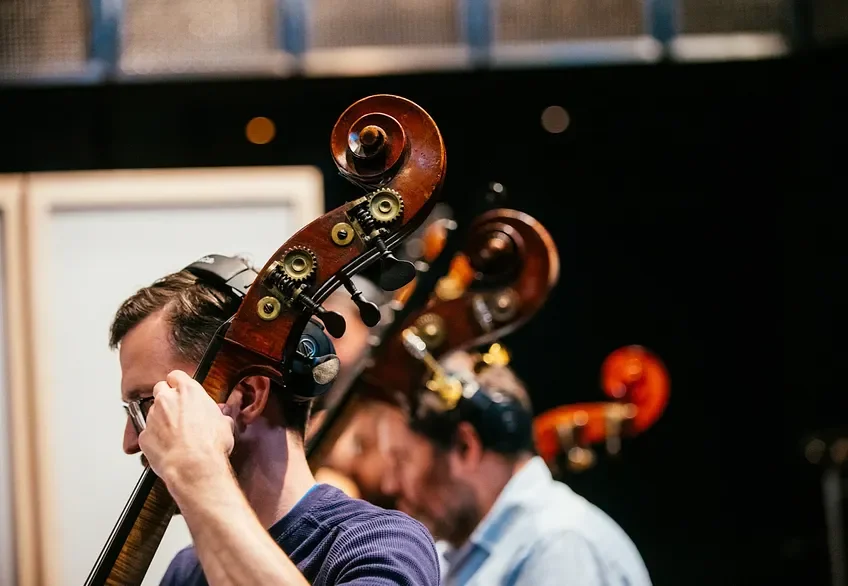
Photo by Brennon Fain
What’s one thing you wish you’d known before your first orchestral recording?
This is so dumb and embarrassing to admit, but make sure you write as idiomatically as possible, even if you’re doing a fully modern “hybrid” kind of score. Human beings need to breathe. They also need to rest their muscles, even the best of the best. The more you write with real players in mind, the better your music will be. I have a couple of cues from my first few sessions that no one will ever hear because I didn’t keep that in mind.
What would you tell a composer who’s planning their first live session?
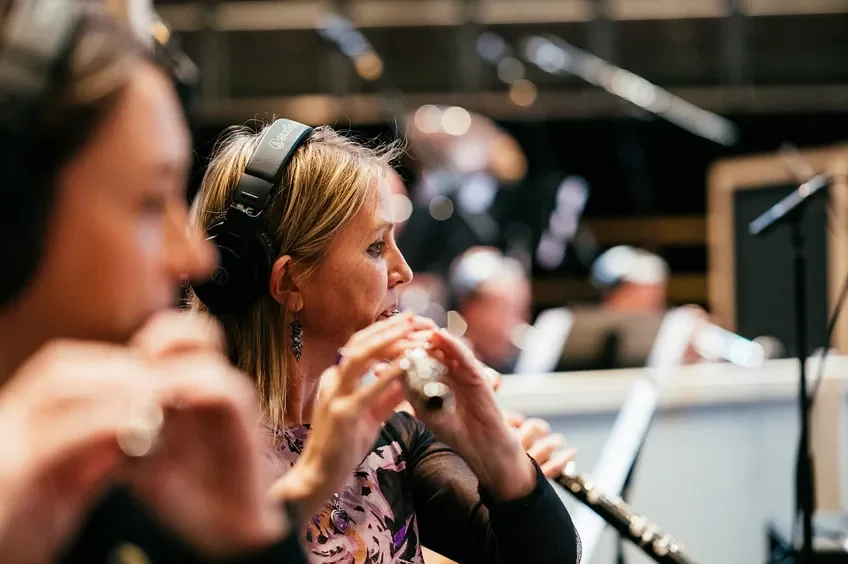
Photo by Brennon Fain
Take a deep breath. Take several! It’s extremely nerve-racking, no matter what, but trust the people that got you there, including yourself, and have fun.
Also trust the people in the room playing your music. Everyone’s goal is to make your music sound the best it can possibly be, and sometimes it takes a bit to get there, so don’t be afraid if the first run-through doesn’t sound exactly how you heard it in your head or in your computer. And conversely, be flexible. Sometimes the orchestra can enhance your music in ways that may surprise you. Be open to that.
How do you prepare differently when you’re recording remotely, or with an engineering team you’re meeting for the first time?
The first thing would be to ask as many people as you can what their experiences might be with the group you’re recording with. Jump on Facebook or put out a few strategic text messages if you can and gather some intel. The more prepared you are, the better. Nothing is worse than a surprise when the red light is on. You can just see the dollars evaporating in front of you.
Also, most orchestras work well remotely these days, but I find that it’s best to have some additional team members on the call if you can. They might catch things that you don’t, and it’s a bit easier to get distracted when you’re not in the room or in the studio. Also, take a thorough look over your scores and check things like cues and overdubs, and maybe mentally make a plan for what is a priority and what you can live without. Time passes very quickly, and if you get bogged down with minutiae, you’ll regret it afterwards if you either don’t get something important or are rushing through takes.
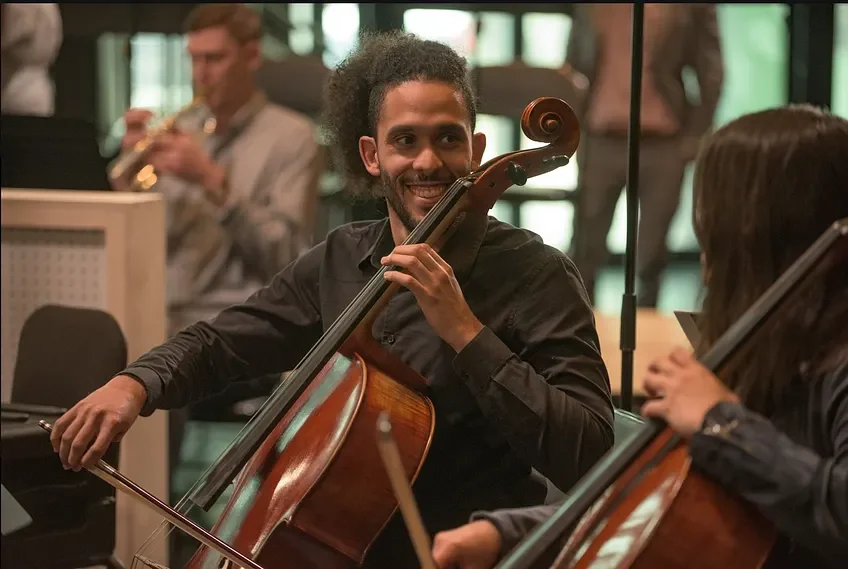
Photo by Travis Guathier
Game scores keep evolving long after launch. Where do you see orchestral scoring heading over the next five years?
There is a growing trend I’ve noticed of recording options where an orchestra can stripe (i.e., record each section separately) at the same time by being set up in multiple rooms. Games often need more granularity in their music to account for the dynamic mixing that is unique to the medium.
Striping adds time and expense and sometimes can introduce issues with tuning, feel, and timing if the players are not as experienced with that recording method. I think being able to do it simultaneously is a real benefit in that you get everything recorded in real time with the control over the final mix that striping allows. I’d love to see more places add that capability.
How has the landscape for recording orchestral scores changed in recent years, and where are you seeing composers choose to go?
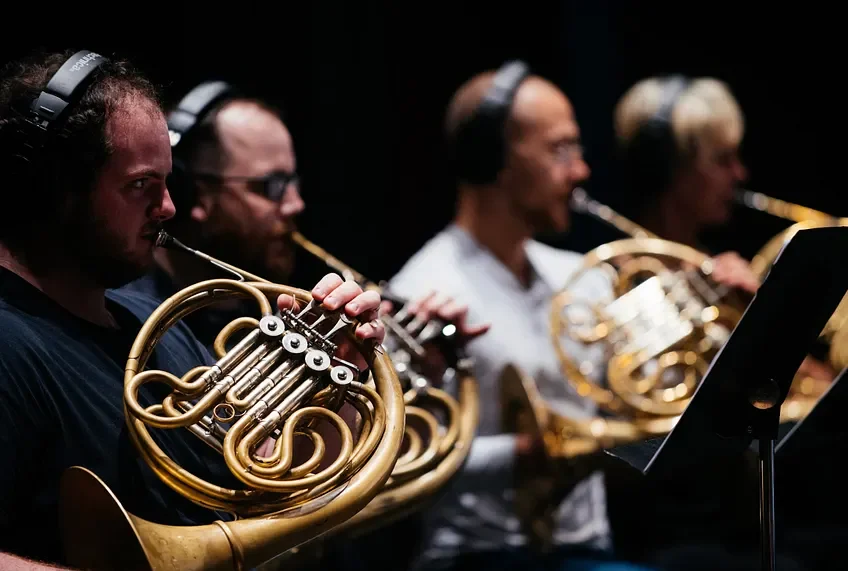
Photo by Joseph Vidrine
The idea that there are only one or two places in the world to get incredible session work just isn’t true anymore. Nashville proved how deep of a scoring talent pool exists across the country, Vienna built a phenomenal modern room with Synchron, and European stages showed everyone how painless remote recording can actually be.
The big shift over the last decade is that great rooms, great engineering, and killer sight-reading players aren’t confined to just traditional legacy hubs. That’s been huge for composers. It means we have genuine, high-level choices that actually line up with realistic budgets and schedules.
Budgets and schedules are tight on a lot of projects, games included. How do you decide where to invest in a score?
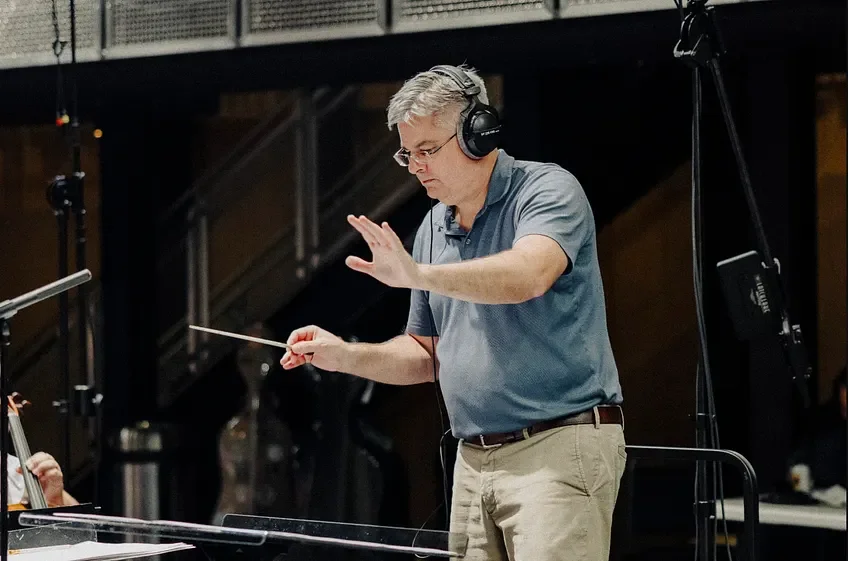
Photo by Brennon Fain
This kind of thing is an unexpected part of the job that I don’t think most composers are prepared for when starting out. While we’d rather just be writing music exclusively, we are often asked to be project managers as well and handle all aspects of score production.
The goal is always to create the best score possible, and that often means having a solution at the ready for how to record live elements. I would rather have a plan A-Z before deciding that the only option is to do it all with software.
When you look at that whole checklist including the acoustic balance of the room, reliable musicianship, remote workflow, and realistic scheduling, how do you actually pull all those pieces together on a project?
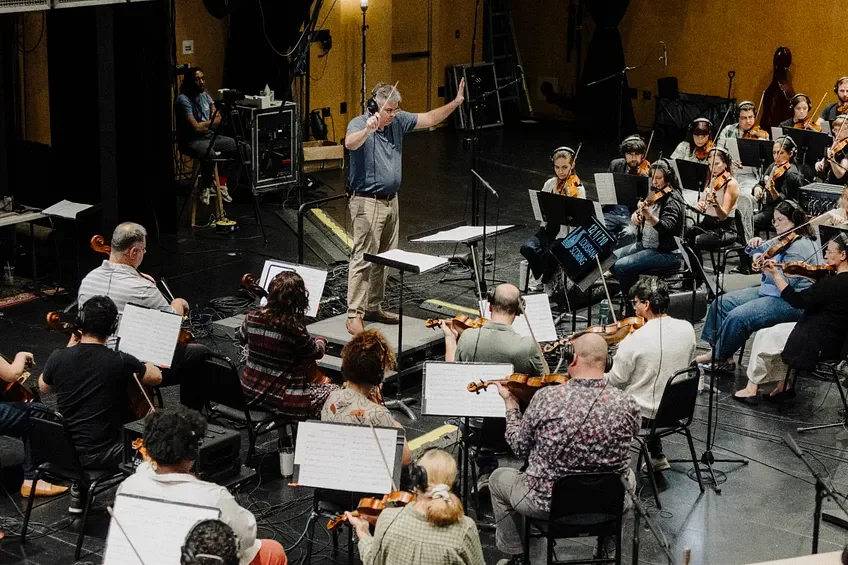
Photo by Brennon Fain
For me, the real challenge on most projects is finding a way to get live musicians on the score at all. Too often, budgets make live sessions feel completely out of reach, and you’re pushed into doing the entire thing with computer software and sample libraries.
You want a room that sounds lively without muddying your mix. You want players who can nail the feel right out of the gate, and a remote feed where you don’t feel disconnected from the booth. But you also need a setup where you aren’t blowing through your entire music budget in ninety minutes.
That balance is why I ended up getting involved with Louisiana Scoring. It hit every practical thing I listen for. The hall sounds fantastic and takes reverb naturally, the players get modern media, and the remote pipeline is totally frictionless. Having a setup like that means I don’t have to make extreme compromises or settle for synthetic instruments. It lets you get real air moving through a room on projects where a live session would usually be completely off the table.